
The 5-paragraph model (also called the five-paragraph order), often used during the issuing of orders, can be used anywhere and by anyone. Whether you work in the Ministry of Defence or at your local restaurant, this model allows you to give your unit or employees a clear briefing on the agenda. If all team members know what they have to do, their roles, and the associated tasks, everyone will know what to do to successfully carry out the day's mission. It's so easy. The 5-paragraph model originated with the armed forces of NATO (North Atlantic Treaty Organisation). To maintain a structured issuing of orders, a standard form was developed that everyone uses. This makes the issuing of orders easy to apply in a variety of situations.
The five-paragraph order issuance (five-paragraph model or five-paragraph order) consists of five different parts. These five different parts are always used in a fixed order. This is clear to all stakeholders. There is no need to differentiate whether this is applied to the Ministry of Defence or a company outside the Ministry of Defence, such as a catering establishment. Only the content of these parts differs; the precise details are explained below.
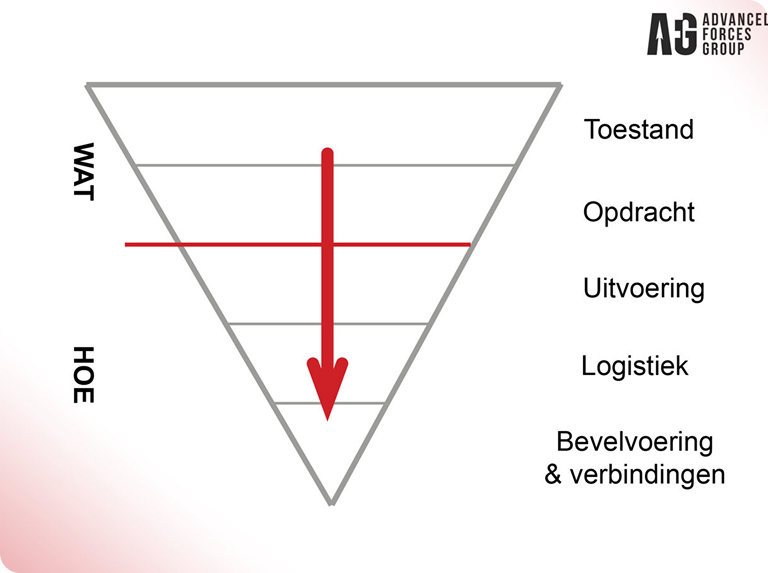
: The condition describes the situation everyone is in. This includes both external and internal factors. In the Defense Department, external factors refer to the "enemy" and factors such as the environment, location, and weather. The enemy can be translated as guests in the restaurant, also known as customers. Internal factors in the Defense Department refer to your "own troops," which can be translated as the team. This section provides more information about the team's capacity and current state.
This section briefly and clearly explains the assignment/mission issued during the order. For the Ministry of Defence, this section focuses on the unit's assignment. For the restaurant, it's the day's assignment. This is described using the 5 Ws: Who, What, Where, Why, When.
This part focuses on executing the assignment. The unit or team is divided, and everyone is assigned their own assignment and tasks. Answers are provided to the questions: who, what, how, where, why, and when. It's helpful to work with different phases. These phases reflect the different situations you and your team face. The phases can vary per assignment, but below is an example:
Phase 1: Preparation phase, this includes everything that needs to be done beforehand for the assignment.
Phase 2: Travel to the assignment.
Phase 3: The actual action.
Phase 4: Closing.
Phase 5: The journey back.
Phase 6: Debriefing the assignment. Depending on the complexity of the assignment, multiple phases will be used.
Logistics encompasses everything related to materials. Anything not yet mentioned, or already briefly mentioned, in the previously mentioned sections is clarified here. All logistics agreements are listed here.
Here you explain who has which leadership role. Then you explain how you communicate with each other and who communicates with each other.
Now you know all about the various components of the five-paragraph model/five-paragraph order. Below are two fictitious examples to illustrate how you can apply it. Whether you work in the military, the police, or a hospitality industry, the five-paragraph model (5W-H) can be applied anywhere. We'll show you how.
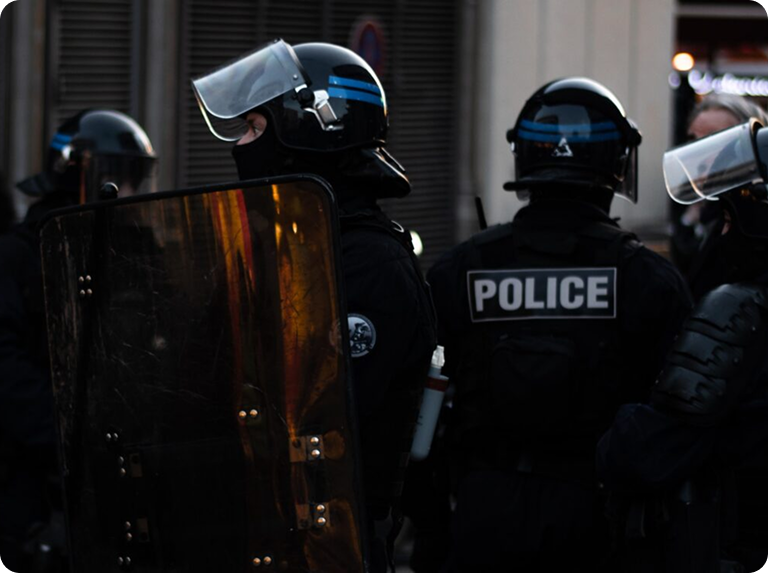
It is 20 degrees Celsius, cloudless and no major events planned on the day of the assignment. No major roadworks on the possible routes. The team is at a secure location in the Netherlands. Suspect X is in the Extra Secure Facility (EBI) in Vught. Suspect is being threatened by outsiders as he/she is going to testify in an important trial.
Transport of suspect X from the EBI in Vught to the Schiphol court and back, so that suspect X can be present in the Schiphol court for the hearing of his/her trial.
Team 1 consists of ... and .... You will pick up the suspect from the EBI in Vught and bring suspect X to the court. Team 2 consists of .... and ....., you will secure the area surrounding the court. Team 3 consists of .... and ...., you will bring suspect X back to the EBI in Vught.
Phase 1 – Preparation:
Team 1 provides an armored car and a bulletproof vest for suspect X. An unpredictable route must be selected. Team 3 must be informed of this by team 1.
In this phase, team 2 will find out what is happening in and around the courthouse that day that needs to be taken into account.
Team 3 prepares the return route and discusses this with team 1.
Team 3 is responsible for informing suspect X’s lawyer about the date and what to wear.
Phase 2 – Outward route:
Team 3 starts driving the route 5 minutes in advance. Team 1 then picks up suspect X at the EBI in Vught in the armored car. Team 3 remains driving 5 minutes ahead of team 1 and monitors the road for suspicious situations. If a suspicious situation occurs, the route to be followed is deviated from. At the courthouse, we take the left entrance to drive in.
Phase 3 – The actual action:
Team 1 monitors the courthouse entrance.
Team 2 monitors the building from the outside, looking for suspicious situations.
Team 3 drives around the neighborhood and returns to the courthouse 10 minutes before the end of the hearing, entering through the right-hand entrance.
Phase 4 – The closure:
Once team 3 is inside, team 1 drives around the neighborhood to secure the road with suspect X 5 minutes before team 3 leaves. Team 2 leaves 5 minutes later via the same route.
Phase 5 – The return route:
Team 3 drives back to the EBI in Vught and returns suspect X. Team 1 drives ahead to secure the road. Team 2 follows at a 5-minute distance. After delivering suspect X to the EBI Vught, teams 1, 2 and 3 drive back to the safe location separately.
Phase 6 – Debriefing:
When all teams have returned, the assignment will be evaluated.
B5 armored vehicles.
Uniform: unmarked civilian.
Suspect wears bulletproof vests unobtrusively under his clothing.
Medical evacuation plan (Medic team, emergency dispatch, 112, hospitals near the route)
Command:
Team Leader Team 1 (is in charge)
Team Leader Team 2 (takes over leadership if team leader 1 is absent)
Team Leader Team 3 (takes over leadership if team leader 2 is absent)
Connections:
Team to team: channel 4
Control room: Overhead line 3
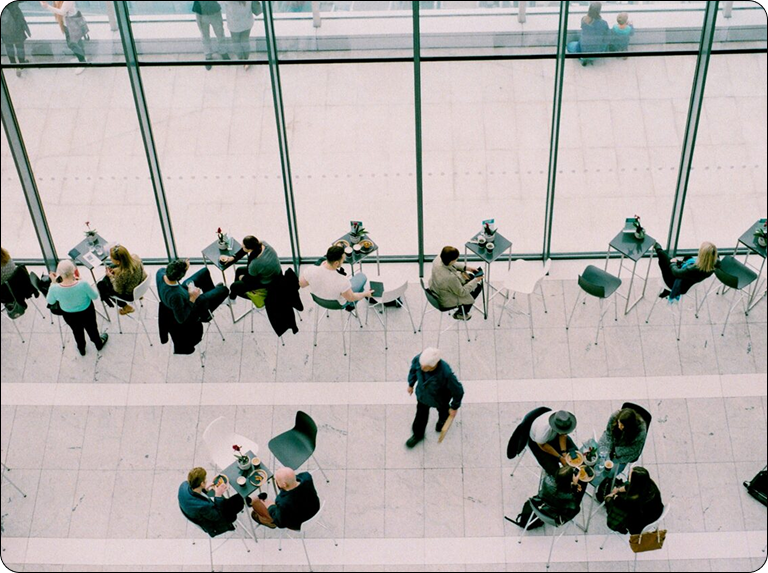
External factors: There's a wedding on April 16th. The forecast is 50% chance of rain, 50% chance of sunshine. A total of 100 guests are attending, but it's possible there will be more, as not everyone's plus-one has been factored in yet. Some guests have dietary requirements, such as vegan and vegetarian.
Internal factors: We have our core wedding team. Because we're currently renovating, we're not using the wedding hall, but the party hall, which still needs to be converted.
Your assignment is to organize the wedding so that the bride and groom have a fantastic day.
The bartender is always behind the bar making drinks. The runners are constantly walking around the bar collecting empty glasses. The hostesses walk around taking orders, carrying a tray full of their favorite drinks. The server makes sure there are enough glasses. And the chef makes sure the snacks never run out.
Phase 1 – Preparation:
The bartender checks the bride and groom's favorite drinks and ensures they've ordered enough.
The runners ensure the party glasses are delivered to the bar and that there are wedding reception tables in the hall for guests to place their drinks on.
The hostesses ensure the hall is clean, as it always is at the opening. Each hostess must have a tray with enough space for 10 drinks.
The bartender ensures the party glasses are polished and are at the front.
The main hostess is responsible for the red carpet outside.
Phase 2 – Outward route:
Because we'll be eating in the canteen, we need to be careful not to enter the party room through the entrance to ensure no one can see us. We'll enter simultaneously through the emergency exit on the right.
Phase 3 – The actual action:
This phase begins when the first guest arrives.
The hostess welcomes everyone and asks the bride and groom every hour and a half if they are satisfied, each time using a different, unobtrusive choice of words.
At this point, the bartender takes care of making drinks on request and preparing their favorite drinks for the hostesses' trays. Keep the bar clean at all times; this means no old glasses, no visible wipes, and no rings on the rims.
The runners clear out the empty glasses, take them to the kitchen, and bring a new tray of clean glasses forward to leave at the bar. When someone asks for a drink, don't decline it; pass it on to the hostess.
The hostesses walk around with a tray full of their favorite drinks collected from the bar, and take their drink orders. This is done digitally.
Phase 4 – Closing:
At 11:00 AM, the hostess announces to the bride and groom that the final round is about to begin. At 12:00 PM, she turns on the lights. And at 1:00 PM, she asks everyone through the band's microphone to go home.
After the last receipt has been received at the bar, the bartender begins with small, quiet cleaning tasks, such as refilling the sugar and milk, and tidying the napkins. At 1:00 PM, they begin the more noisy tasks: cleaning the coffee maker, cleaning the tap, and refilling drinks.
The runners ensure that all empty glasses are removed from the room by 1:00 PM.
The washer ensures that all glassware is clean and polished and returns to the bartender's place. Cleaning begins at 12:00 PM, and glasses are cleared away at 1:00 PM.
At 11:00 AM, the hostesses ask everyone for the final round while still holding a tray of their favorite drinks; these will be taken away as soon as possible. Then, at 12 noon, they'll start cleaning the restrooms, and at 1 p.m., they'll help out where needed. Everyone keeps a cleaning list so the hostesses know where they can help.
Phase 5 – The return route:
After the assignment, we all return to the canteen, which we do through the front door because the building's alarm is activated. Phase 6: Debriefing the assignment: In the final phase, we discuss how the evening went. What challenges did you encounter and what went well. Then we discuss who will drive home with whom.
Phase 1 takes place one day before at 9:00 AM. Some things take place in the afternoon, around 12:00 PM, before the event. Phase 2 begins at 7:00 PM. Phase 3 takes place when the first guest arrives, which will be around 8:00 PM. Phase 4 runs until 1:30 PM. Phase 5 is at 2:15 PM. Phase 6 runs from 2:30 PM to 4:00 PM.
The party glasses are crystal.
Everyone wears their black three-piece suits with their hair pulled back.
A word about drinks.
Who's who? Bartender is… Hostess is… etc.
The head hostess consults with the hostesses and bartender, using the earpiece.
If the runner is at the bar, the bartender speaks to them. If the runner is on the floor, the hostess speaks to them.
This is an example of how you can implement the 5-paragraph order form in your company. The implementation will be different for every organization, so the format is best kept consistent. When completing this template, keep in mind that by the end of this order issuance, the questions will be answered and everyone will be able to perform their work.
02-06-2021, VAN DER KAM JH The standardized operational order, https://www.militairespectator.nl/sites/default/files/bestanden/uitgaven/1918/1954/1954-0095-01-0033.PDF
%20(1)-3.png?width=1440&height=800&name=Hero%20Section%20(1)%20(1)-3.png)
The 7 functions of combat refer to the framework used by the military to plan and execute operations. These functions plays a crucial role in achieving military objectives by ensuring the physical movement of troops and equipment, gathering and analyzing intelligence.
READ MORE
TCCC originated in the United States. Since 2005, military personnel have been trained here to apply the TCCC in enemy territory to increase the chance of a casualty's survival.
READ MORE
The Dutch military has transitioned from the BATLS C-ABCDE protocol to the Tactical Combat Casualty Care (TCCC) MARCH protocol. Both protocols provide a medical step-by-step plan for saving lives in emergency situations:
READ MORE


